Your child isn’t acting out. They’re speaking in the only language they have.
By Annemieke Lais ·
There is a reframe that changes everything about how you see your child’s most difficult behaviour. It is not complicated. But it requires a genuine shift in what you believe is happening.
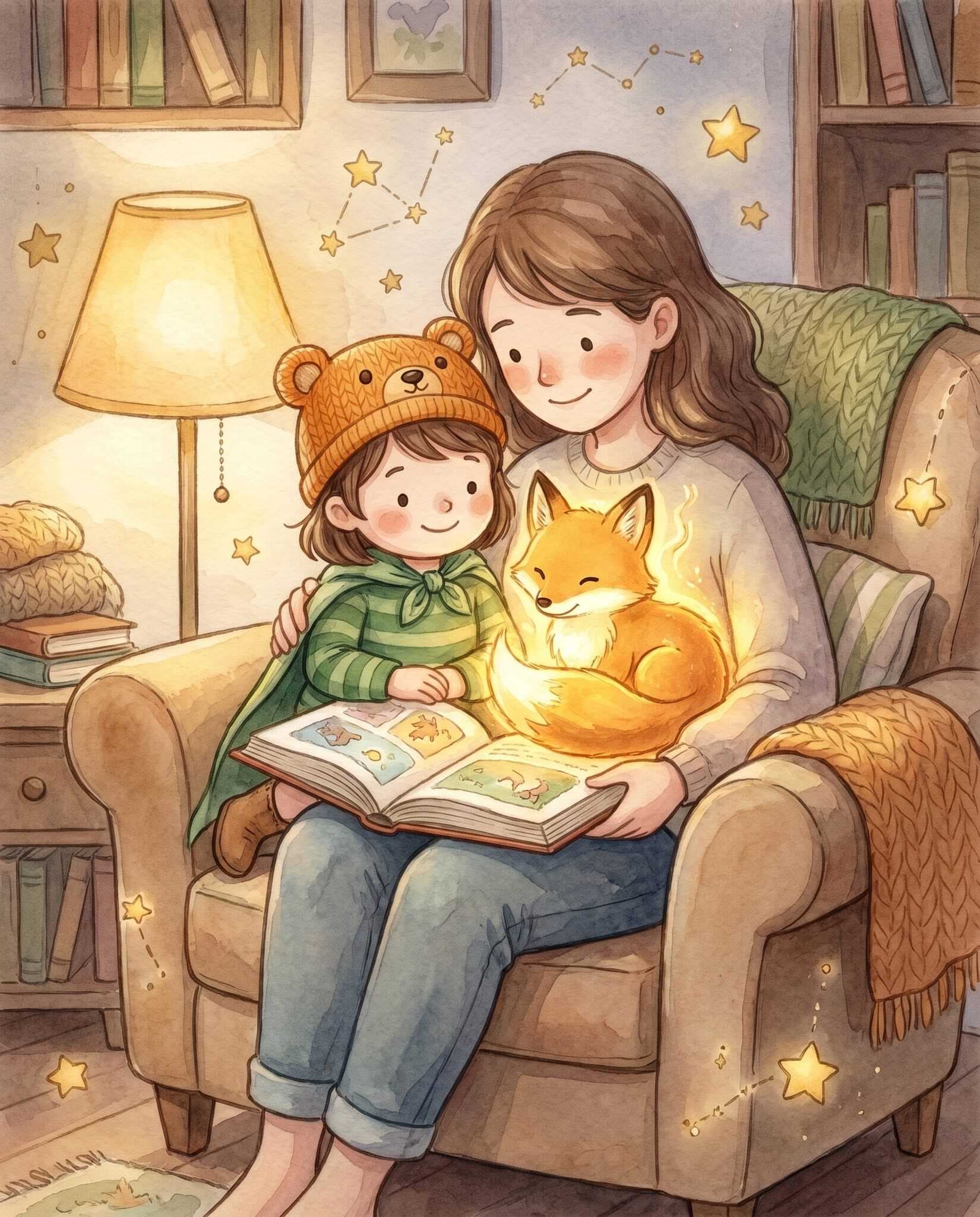
There is a reframe that changes everything about how you see your child’s most difficult behaviour. It is not complicated. But it requires a genuine shift in what you believe is happening when a child hits, screams, refuses, or shuts down.
Here it is: behaviour is always communication. Every difficult behaviour is a message — from a child who does not yet have the words, or the neurological capacity, to deliver that message any other way.
This is not an excuse for the behaviour. It is not a reason to remove all limits. It is an invitation to ask a different question. Instead of “how do I stop this?” — try asking “what is my child trying to tell me?”
What the behaviour is actually saying
John Gottman, a psychologist at the University of Washington whose four-decade study of families produced some of the most cited findings in the history of relationship science, identified five categories of emotion coaching that consistently predict positive child outcomes. The first and most critical: noticing the emotion underneath the behaviour.
Gottman found that parents who could identify the feeling driving a difficult behaviour — and name it before addressing the behaviour itself — had children with significantly better emotional regulation, stronger peer relationships, and higher academic resilience than parents who focused on the behaviour alone. Not because the behaviour was ignored. But because the child first felt understood.
The child who hits is not simply aggressive. They are overwhelmed by a feeling they cannot name, cannot manage, and cannot express any other way. The hitting is the only language available. The parent who addresses the hitting before addressing the feeling is responding to the word without hearing the sentence.
“Every difficult behaviour is a message. The parent who can read the message — before responding to the behaviour — is practising the most powerful form of emotional coaching available.”
The translation guide
Here is what some of the most common difficult behaviours are often communicating. Every child is different, and context always matters — but these translations reflect patterns observed consistently in child development research and clinical practice.
Why stories reach where lectures cannot
Once you understand behaviour as communication, the limit of the lecture becomes clear.
A lecture
Addresses the behaviour. Speaks to the part of the child that already knows what they did. Does not reach the overwhelmed feeling that caused it — and so does not prevent it happening again.
A story
Reaches the feeling underneath. Shows a character who experienced the same overwhelm, made a choice, and was met with warmth. Gives the child a model to observe and internalise — not a rule to follow, but an experience to absorb.
Albert Bandura, the Stanford psychologist whose social learning theory transformed our understanding of how children learn, showed that children acquire behaviour primarily through observation and modelling — not through verbal instruction. They watch what the adults and characters around them do. They copy not just the behaviour but the emotional context of the behaviour.
The sequence that works
In practice
Wait until you are both calm.
Name the feeling you observed: ‘Earlier, when you hit your brother, I think you were feeling really overwhelmed.’
Validate it: ‘That makes sense — you’d been waiting a long time and it felt unfair.’
Then, at bedtime: a story about a character who felt exactly the same way.
The story as a second language
There is something quietly profound about what a story offers a child who cannot yet find words for their experience. It gives them a character — a fox, a bear, a small brave rabbit — who has that same feeling, names it, and navigates it. The child does not have to admit anything. They do not have to be vulnerable in the raw, exposed way that a direct conversation requires. They can observe from behind the safety of the character and slowly, silently, make the connection.
This is not avoidance. This is the path in. Often, it is the only path in.
Nuri Tales creates stories designed around the specific behaviour and feeling you describe — because the story works best when it mirrors the exact emotional experience your child just had. Not a generic lesson. A personalised path in.
See how it worksResearch references
Gottman, J. M., Katz, L. F., & Hooven, C. (1996). Parental meta-emotion philosophy and the emotional life of families: Theoretical models and preliminary data. Journal of Family Psychology, 10(3), 243–268. Gottman’s longitudinal research found that children of emotion-coaching parents had fewer behaviour problems, better physical health, higher academic achievement, and stronger peer relationships than children whose parents dismissed or disapproved of negative emotions.
Bandura, A. (1977). Social Learning Theory. Prentice Hall. Bandura’s research, including the Bobo doll experiments, established that children learn behaviour primarily through observation of models rather than direct instruction or reinforcement.
Written by Annemieke Lais, Founder of Nuri Tales