When your child says ‘I hate you’ — what they are actually telling you
By Annemieke Lais ·
Those three words land somewhere in your chest. They sound like rejection. Like failure. But developmental research tells a completely different story about what a child actually means when they say them.
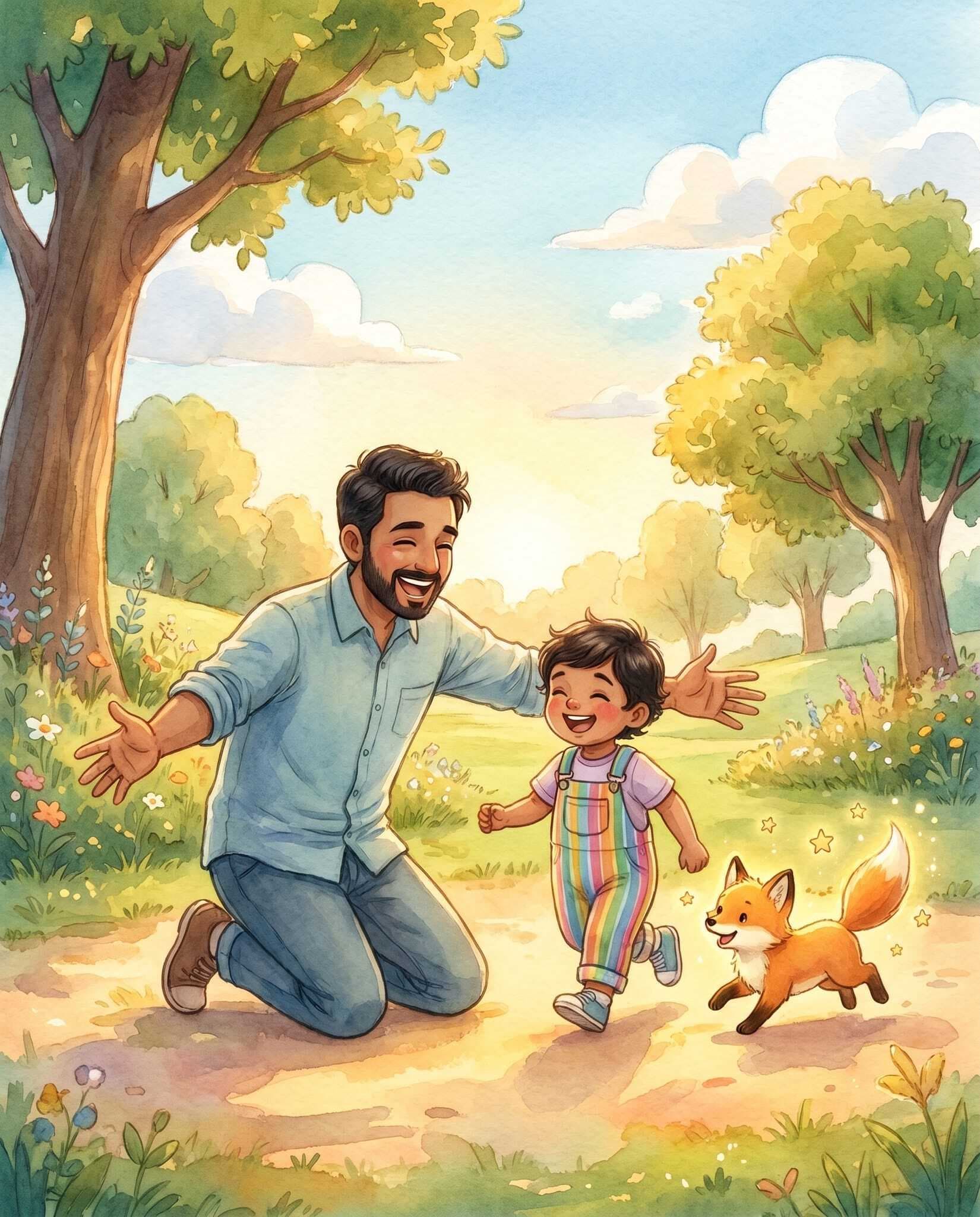
My son said it for the first time when he was four. We were in the middle of a transition he did not want — leaving the park, I think, or turning off something he loved. The details are gone. The words are not.
‘I hate you, Mama.’
I remember the way time seemed to slow slightly. The way I felt it land somewhere in my chest. The specific effort it took to keep my face calm when everything in me wanted to either crumble or fight back.
I also remember what I did not know then, that I know now. And it changes everything about how I hear those words.
What those words actually mean
‘I hate you’ is one of the most misunderstood sentences a child can say. On the surface it sounds like rejection, like failure, like evidence that something has gone wrong between you. But developmental research tells a completely different story.
John Bowlby, the British psychiatrist whose attachment theory transformed our understanding of parent-child relationships, spent decades documenting how children test the security of their most important bonds. His central finding — built upon by decades of subsequent research — is that children direct their most extreme emotional expressions toward the people they feel safest with. Not away from them.
‘I hate you’ from a four-year-old is not a statement of rejection. It is, paradoxically, a statement of trust. The child is presenting their biggest, most terrifying feeling to the person they most trust to hold it. They are asking, in the only language available to them: can this relationship survive my worst? Will you still be here when I say the most extreme thing I know how to say?
“‘I hate you’ is not a statement of rejection. It is a test of the relationship. The child is asking: will you still be here when I say the worst thing I know how to say?”
What is actually happening developmentally
A young child experiencing a big feeling — overwhelm, frustration, grief about something ending — does not have a proportionate vocabulary for it. They do not have the words ‘I feel overwhelmed’ or ‘I’m devastated that this has to end.’ What they have is the biggest word they know. And ‘I hate you’ is the biggest word in a young child’s emotional dictionary.
It is not precision. It is emergency expression. The child is not describing the nuance of their emotional state. They are discharging an overwhelming feeling through the most powerful language tool they currently possess.
Understanding this does not make the words sting less, necessarily. But it makes them mean something completely different. They are not a verdict on the relationship. They are evidence of it.
The response that strengthens the attachment
Mary Ainsworth, the developmental psychologist whose Strange Situation experiments in the 1970s produced the foundational classification of attachment styles, showed that what predicts secure attachment is not the absence of ruptures — it is the parent’s capacity to remain available and warm when the child’s behaviour is most difficult.
The parent who receives ‘I hate you’ with calm curiosity — who stays present, who does not withdraw love or escalate — is passing the test the child is setting. They are demonstrating that the relationship is secure: that love is not conditional on nice words, that the bond can hold the worst as well as the best.
The response that does this does not have to be eloquent. It does not have to resolve the situation immediately. It can be as simple as:
“You’re really upset right now. I can see that. I’m staying right here.”
That calm staying is everything.
What not to do — and why
The responses that damage the attachment bond are not the ones we think they are. They are not about losing patience occasionally, or saying the wrong thing, or getting it wrong on a bad day. Every parent does those things. The research is clear: occasional imperfection does not harm secure attachment.
What causes harm
- Going cold and withdrawing warmth
- Saying ‘then I don’t love you either’
- Leaving the room and refusing to re-engage until an apology comes
- Teaching that love is conditional on nice words
What builds security
- Staying physically present
- Naming what you see without escalating
- Letting the storm pass without punishment
- Reconnecting warmly once calm returns
Children who learn that love is conditional carry that lesson forward. They learn to hide their most difficult feelings rather than express them. They learn to perform emotional states rather than experience them. That is a high price for a moment of escalation.
The story that comes later
In the moment, the job is simply to stay. To not take the bait. To be the steady presence that demonstrates the relationship is secure.
But later — once the storm has passed, once connection has been restored — there is another opportunity. A story about a character who had a feeling so enormous they didn’t have words for it. A character who reached for the biggest word they knew. And a parent character who stayed anyway, pulled them close, and said: I’m not going anywhere. Not ever.
The story does not lecture. It does not explain. It simply shows the child, from a safe distance, that the love holds — and gives them an image to carry forward the next time a feeling arrives that is bigger than any word they know.
Nuri Tales creates stories for exactly these moments — the ones that leave a parent searching for the right response. Sometimes the right story after a hard moment heals more than anything said in the middle of it.
See how it worksResearch references
Bowlby, J. (1969). Attachment and Loss, Vol. 1: Attachment. Basic Books. Bowlby’s foundational research established that children express their most intense emotions within their primary attachment relationships as a form of attachment behaviour — testing and reinforcing the security of the bond.
Ainsworth, M. D. S., Blehar, M. C., Waters, E., & Wall, S. (1978). Patterns of Attachment: A Psychological Study of the Strange Situation. Lawrence Erlbaum. Ainsworth’s research demonstrated that secure attachment is predicted by parental warmth and responsiveness during the child’s most distressed moments — the parental response to negative emotion was the critical variable.
Written by Annemieke Lais, Founder of Nuri Tales