The ethical checklist we run before every story Nuri Tales generates
By Annemieke Lais ·
A story that makes a child feel ashamed is a failed story, regardless of how beautiful it is. Here are the eight guardrails we check before any story reaches a family.
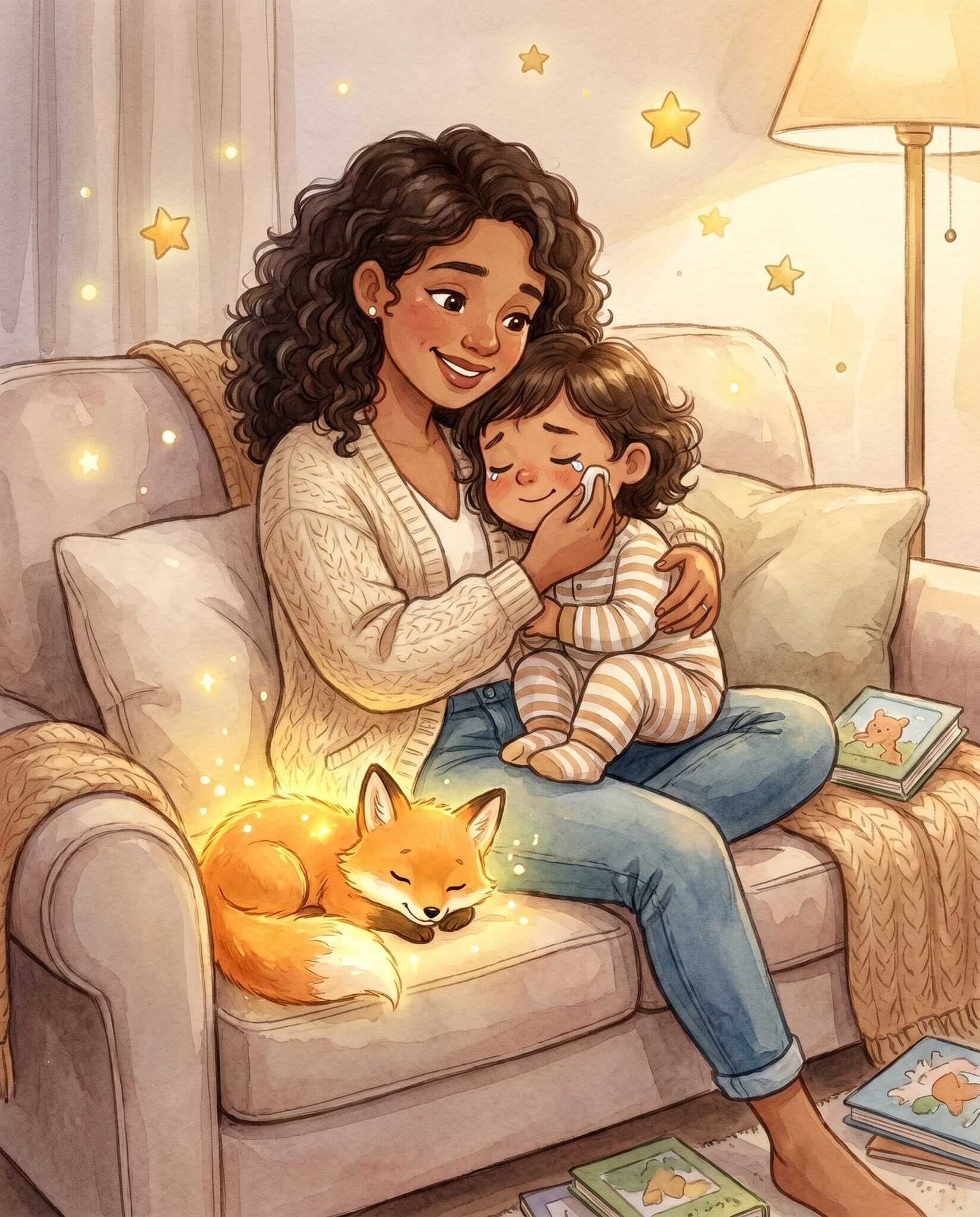
Every story Nuri Tales generates passes through a set of guardrails before it reaches a family. We call it a checklist, but it is really a set of questions — things we ask of the story before we consider it done.
We are publishing it here, in full, for two reasons. First, because we believe parents deserve to know what standards are being applied to content that enters their child’s most private moments. Second, because we believe these guardrails should not be proprietary. If other companies building in this space adopt them, children will be better served. That is a more important outcome than competitive advantage.
The framework begins with a single foundational principle:
“A story that makes a child feel ashamed is a failed story — regardless of how beautifully it is written.”
Shame versus guilt — why the distinction matters
Before the eight guardrails, one distinction underlies all of them: the difference between shame and guilt.
Shame
I am bad. Shame is a verdict on the self. It produces withdrawal, hiding, and disconnection. A child in shame does not repair — they disappear. Research consistently links shame to anxiety, aggression, and reduced empathy over time.
Guilt
I did something bad. Guilt is a verdict on the behaviour. It is uncomfortable, but it is generative — it motivates repair, apology, and change. A child who feels guilty still feels worthy of relationship. That is the difference.
Every guardrail below is, in some form, an attempt to produce guilt where appropriate — and to prevent shame entirely.
The eight guardrails
No labels that damage self-worth
A character is never described as bad, naughty, broken, or fundamentally flawed. Behaviour can be wrong. The child behind the behaviour cannot be. This distinction is not cosmetic — it is the difference between shame and guilt, and it shapes everything.
Gradual transformation, not instant change
Characters do not simply decide to be better and immediately become so. Change is shown as effortful, non-linear, and real. A story that promises instant transformation teaches children that struggle means failure — and that is precisely the lesson we do not want to land.
Balanced adult-child dynamics
Adults in Nuri Tales stories are not infallible authorities or helpless bystanders. They are imperfect, trying humans — capable of making mistakes, capable of repair. This reflects the reality children actually live in, and gives them something true to work with.
Moral complexity is acknowledged
A character can want two things that conflict. A right choice can still be a hard one. A good person can do something unkind. Stories that flatten moral reality into simple good-versus-bad fail to prepare children for the world they will actually inhabit.
Natural consequences, not punishment
When a character's actions have consequences, those consequences flow naturally from the action — they are not imposed as punishment by an authority figure. Children learn from cause and effect. They do not learn from arbitrary discipline that does not connect to the behaviour.
Unconditional parental love
In every Nuri Tales story, the parent figure's love is not conditional on the child's behaviour. It does not waver when the child gets it wrong. This is not sentimentality — it is the foundational message of secure attachment, and it is the thing we most want children to carry forward.
Cultural values are respected
A personalised story enters a family's most private space. We do not impose a single cultural framework on what good parenting, good behaviour, or a good family looks like. The stories adapt to the family — not the other way around.
Repetitive themes are monitored
If a child's stories consistently return to the same emotional territory — always about fear, always about being excluded, always about anger — that pattern is a signal, not a coincidence. We do not want to inadvertently reinforce a fixed negative identity through repeated narrative.
Why we publish this
This framework is not perfect. There are edge cases it does not cover and questions it does not fully answer. We will update it as we learn.
But we publish it because we believe that standards applied in private are not really standards — they are preferences. Making this visible means you can hold us to it. It means the bar is real, not just aspirational. And it means that any other company building AI stories for children can look at this list and ask: are we doing the same?
We hope they do.
Every Nuri Tales story passes through these eight guardrails before it reaches your family. That is the standard we hold ourselves to.
See how it worksResearch references
Tangney, J. P., & Dearing, R. L. (2002). Shame and Guilt. Guilford Press. Tangney’s research establishes the empirical distinction between shame (a verdict on the self, associated with withdrawal and aggression) and guilt (a verdict on the behaviour, associated with repair and prosocial motivation).
Brown, B. (2010). The Gifts of Imperfection. Hazelden. Brown’s work on shame resilience reinforces that shame corrodes connection, while guilt, when appropriately handled, supports it.
Written by Annemieke Lais, Founder of Nuri Tales